What is obstruction of justice?
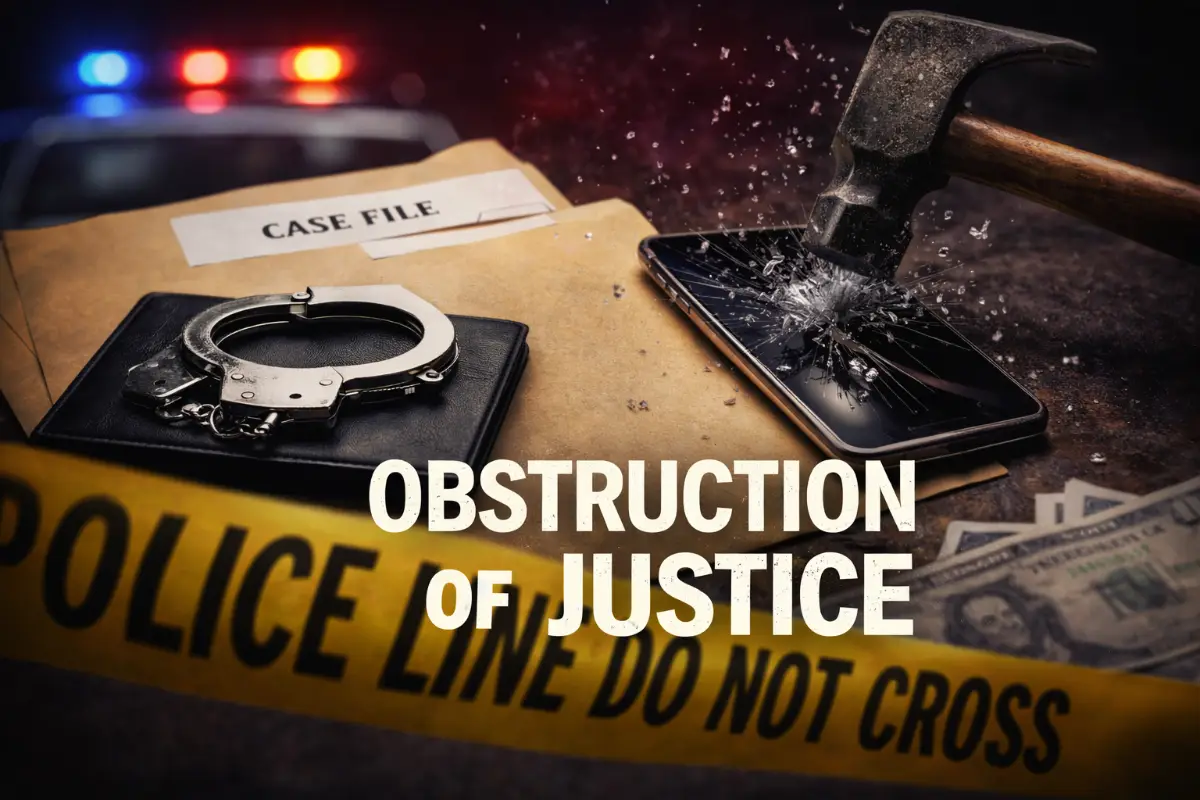
In short, obstruction of justice is anything that interferes with a criminal investigation, prosecution or proceeding.
What can be considered obstruction of justice?
Lots of different activities — from the innocuous and seemingly innocent to more-obvious and deliberate — can fall under the extremely broad definition of obstruction of justice.
Some of those activities include:
- Lying to the police, other sworn investigators, prosecutors or a presiding judge;
- Destruction of evidence related to a current or potential criminal investigation;
- Tampering with evidence, including through alteration;
- Tampering with witnesses, including by threat, bribery or coercion;
- Aiding a criminal suspect;
- Providing a false alibi.
Sometimes you may think you’re helping someone on the opposite end of a criminal investigation, but you may actually be obstructing justice.
The federal obstruction of justice statute (18 U.S.C. § 1503-1505) defines the offense as any act that “corruptly or by threats or force, or by any threatening letter or communication, influences, obstructs, or impedes, or endeavors to influence, obstruct, or impede, the due administration of justice.”
In order for a prosecutor to prove an obstruction of justice charge against a person, he or she must show that the accused:
- Had specific intent to obstruct;
- Knew a criminal proceeding or investigation was pending or under way;
- Had knowledge of a connection between the two.
Federal obstruction charges can be brought in cases pending or being heard before a court, or in any investigation brought by Congress, the FBI, or another federal administrative agency. Charges can also be brought if a current or pending proceeding is merely an informal probe by any executive agency.
Some states also have obstruction of justice laws on the book. California, for example, not only applies its obstruction of justice statute to police and other law enforcement personnel, but also to emergency medical personnel in the course of their normal jobs. Lying under oath, resisting arrest or attempting to bribe a judge or juror can also yield charges under the state’s obstruction of justice law.
Federal and state obstruction of justice charges bring varying degrees of punishment following a conviction at trial or a guilty plea. These punishments can include fines, court costs and even jail or prison time. If you think prison time for obstruction of justice is rare, think again: Celebrity homemaker Martha Stewart was imprisoned following her obstruction of justice conviction, even though more-serious offenses related to securities fraud were dismissed.
Charges under federal or state obstruction of justice laws are serious. If you have been charged with obstruction of justice, or you think you could be charged in the future, contact criminal defense attorney Mark Reichel right now for a free consultation.